Strategic Framework Agreement for a Relationship of Friendship and Cooperation between the United States of America and the Republic of Iraq Part 2
Strategic Framework Agreement for a Relationship of Friendship and Cooperation between the United States of America and the Republic of Iraq Part 2
Maintain active bilateral dialogue on measures to increase Iraq's development, including through the Dialogue on Economic Cooperation (DEC) and, upon entry into force, the Trade and Investment Framework Agreement.
Trade and Investment Framework Agreements (TIFAs) provide strategic frameworks and principles for dialogue on trade and investment issues between the United States and the other parties to the TIFA.
Strategic Framework Agreement for a Relationship of Friendship and Cooperation between the United States of America and the Republic of Iraq Part 2
Maintain active bilateral dialogue on measures to increase Iraq's development, including through the Dialogue on Economic Cooperation (DEC) and, upon entry into force, the Trade and Investment Framework Agreement.
Trade and Investment Framework Agreements (TIFAs) provide strategic frameworks and principles for dialogue on trade and investment issues between the United States and the other parties to the TIFA.
Although the names of Framework Agreements may vary, e.g., the Trade, Investment, and Development Agreement (TIDCA) with the South African Customs Union, or the United States-Icelandic Forum, these agreements all serve as a forum for the United States and other governments to meet and discuss issues of mutual interest with the objective of improving cooperation and enhancing opportunities for trade and investment.
The United States and our TIFA partners consult on a wide range of issues related to trade and investment. Topics for consultation and possible further cooperation include market access issues, labor, the environment, protection and enforcement of intellectual property rights, and, in appropriate cases, capacity building.
TIFA Councils normally meet at least once a year at senior levels of government.
The United States has TIFAs with countries at different levels of development and trade and investment interests.
Below are TIFA Agreements, sorted by region.
http://www.ustr.gov/trade-agreements/trade-investment-framework-agreements
TRADE AND INVESTMENT FRAMEWORK AGREEMENT
BETWEEN THE GOVERNMENT OF THE UNITED STATES OF AMERICA AND THE GOVERNMENT OF THE REPUBLIC OF
IRAQ CONCERNING THE DEVELOPMENT OF TRADE AND INVESTMENT RELATIONS
The Government of the United States of America and the Government of the Republic of Iraq (individually, a "Party" and collectively, the "Parties")
:
1 Recognizing the urgent need to revive Iraq's economy, bolster private-sector development and further Iraq's reintegration into the world economy, and noting the work of the U.S.-Iraq Joint Commission on Reconstruction and Economic Development to advance these objectives
;
2 Desiring to enhance the bonds of friendship and spirit of cooperation between the two countries
;
3 Desiring to further promote both countries' international trade and economic interrelation between both countries
;
4 Recognizing the importance of fostering an open and predictable environment for international trade and investment
;
5 Recognizing the benefits to each Party resulting from increased international trade and investment, and that trade-distorting investment measures and protectionist trade barriers would deprive the Parties of such benefits
;
6 Desiring to promote transparency and to eliminate bribery and corruption in international trade and investment
;
7 Recognizing the essential role of private investment, both domestic and foreign, in furthering growth, creating jobs, expanding trade, improving technology, and enhancing economic development
;
8 Recognizing that foreign direct investment confers positive benefits on each Party
;
9 Desiring to encourage and facilitate private sector contacts between the two countries
;
10 Recognizing the desirability of resolving trade and investment problems as expeditiously as possible
;
11 Recognizing the increased importance of services in trade between their economies and in their bilateral relations
12 Taking into account the need to eliminate non-tariff barriers in order to facilitate greater access to the markets of both countries and the mutual benefits thereof
;
13 Recognizing the importance of providing adequate and effective protection and enforcement of intellectual property rights and of membership in and adherence to intellectual property rights
conventions
14 Recognizing the importance of providing adequate and effective protection and enforcement of worker rights in accordance with each nation's own labor laws and of improving the observance of internationally recognized core labor standards
;
15 Desiring to ensure that trade and environmental policies are mutually supportive in the furtherance of sustainable development
;
16 Considering that it would be in their mutual interest to establish a bilateral mechanism between the Parties for encouraging the liberalization of trade and investment between them ; and
17 Desiring further dialogue on ways that the Parties may expand and liberalize trade by exploring the potential for greater cooperation and more comprehensive trade and investment agreements
To this end, the Parties agree as follows
:
ARTICLE ONE
The Parties affirm their desire to expand trade in products and services and to promote an attractive investment climate consistent with the terms of this Agreement
. They shall take appropriate measures to encourage and facilitate the exchange of goods and services and to secure favorable conditions for long-term development and diversification of trade between the two countries
.
ARTICLE TWO
The Parties shall establish a United States-Iraq Council on Trade and Investment ("the Council"), which shall be composed of representatives of both Parties
. The Iraqi side shall be chaired by the Ministry of Trade and the U.S. side shall be chaired by the Office of the U.S
. Trade Representative ("USTR")
.
Both Parties may be assisted by officials of other government entities as circumstances require
. The Council shall meet at such times and in such places as agreed by the Parties
. The Parties shall endeavor to meet no less than once every two years
.
ARTICLE THREE
The objectives of the Council are as follows
I To monitor trade and investment relations, to identify opportunities for expanding trade and investment, and to identify issues relevant to trade or investment, such as intellectual property rights, labor or environmental issues, that may be appropriate for negotiation in an appropriate forum
.
2 To hold consultations on specific trade matters, and those investment matters of interest to the Parties
3 To identify and work, toward the removal of impediments to trade and investment
4 To seek the advice of the private sector and civil society, where appropriate, in their respective countries on matters related to the work of the Council
ARTICLE FOUR
Either Party may raise for consultation any trade matter or investment issue
.
Requests for consultation shall be accompanied by a written explanation of the subject to be discussed and consultations shall be held within 30 days of the request, unless the requesting Party agrees to a later date
. Each Party shall endeavor to provide for an opportunity for consultations before taking actions that could adversely affect trade or investment interests of the other Party
.
ARTICLE FIVE
This Agreement shall be without prejudice to the domestic law of either Party or the rights and obligations of either Party under any other agreement to which it is a party
.
ARTICLE SIX
This Agreement shall enter into force on the date on which the Government of the Republic of Iraq notifies the Government of the United States of America that all legal requirements for entry into force of this Agreement have been fulfilled
.
ARTICLE SEVEN
This Agreement shall remain in force unless terminated by mutual consent of the Parties or by either Party upon six months written notice to the other Party
.
IN WITNESS WHEREOF, the undersigned, being duly authorized by their
respective governments, have signed this Agreement DONE, in duplicate, at Amman this 11th day of July 2005, in the English and Arabic languages, each being equally authentic
FOR THE GOVERNMENT OF THE UNITED STATES OF AMERICA
FOR THE GOVERNMENT OF THE REPUBLIC OF IRAQ
http://www.ustr.gov/sites/default/files/uploads/agreements/tifa/asset_upload_file836_13617.pdf
U.S.-Iraqi Strategic Framework Agreement: Update on Implementation
Fact Sheet Office of the Spokesperson Washington, DC August 15, 2013
Since Vice President Biden traveled to Iraq in November 2011 and convened a meeting of the U.S.-Iraq Higher Coordinating Committee, the Strategic Framework Agreement (SFA) has served as the backbone of our relationship with the Government of Iraq (GOI).
The United States and the GOI value the SFA, as evidenced by public statements by each side, the three Higher Coordinating Committee meetings and 24 Joint Coordination Committee (JCC) meetings held in the areas of cooperation outlined in the SFA, the Working Groups within each JCC that meet on a regular basis, and the myriad of developments across these sectors, a sampling of which is listed below:
Defense and Security (Last JCC in December 2012)
In June 2013, the U.S. Central Command hosted the first U.S.- Iraq Joint Military Committee (JMC), which is a subordinate discussion to the Defense and Security JCC. The JMC addressed issues such as border security, Iraqi military strategy, and engagement of Iraqi Security Forces in regional training exercises. The next JCC likely will be held in Washington this year.
At the December 2012 JCC, Acting Defense Minister al-Dlimi signed a Memorandum of Understanding on Security Cooperation with the U.S. Department of Defense. This agreement represents the strong military to military relationship between the United States and Iraq, and provides mechanisms for increased defense cooperation in areas including defense planning, counter terrorism cooperation, and combined exercises.
With strong U.S. support, Iraq has brought its military engagement with regional partners to historically high levels, including military exercises, strategic conferences and bilateral military engagements. Iraq’s participation in a naval exercise in Bahrain this year marked the first out-of-area deployment by an Iraqi naval unit in the post-Saddam era and the first-ever Iraqi port visit to Bahrain.
In close collaboration with U.S. officials, the Government of Iraq has purchased more than $14 billion in equipment, services, and training through the Foreign Military Sales (FMS) program for its military and security forces. The Iraq FMS program is one of the largest in the world and is an important symbol of the long-term security partnership envisioned by both countries. We remain committed to meeting Iraqi equipment needs as quickly as possible.
Education, Science and Cultural (Last JCC December 2012)
The number of Iraqi students studying in the United States increased by 31% from 2011 to 2012 to a total of over 800. Our close bilateral cooperation in this area should produce continued increases in 2013.
The Baghdad-based English Language Institute, established in partnership with the Iraqi government, is expected to open in October 2013. The U.S. provided $1 million in funding to support English language instruction to hundreds of Iraqi government scholarship students each year for this program.
More than 1,200 Iraqis ages 15-22 participated in the Iraqi Young Leaders Exchange Program, including more than 200 in 2013. Areas of focus include leadership development, respect for diversity, and civic participation.
150 Iraqi professionals participated in the International Visitor Leadership Program (IVLP) in 2013. Themes include women in leadership, science and technology, interfaith dialogue, energy policy, higher education, journalism, civic engagement, elections, public health, entrepreneurship, stock exchange, and environmental protection.
The USG, in conjunction with the UN, IAEA, and Ministry of Science and Technology, held a two-day Nuclear Dismantlement Conference in Erbil in 2013, focusing on the Adaya nuclear burial site in Ninewa province.
The conference represented the culmination of the DOS Iraq Nuclear Dismantlement Program’s seven years of work to safeguard and remediate the most contaminated Saddam-era nuclear sites around the country.
Cultural heritage is a significant pillar of the Strategic Framework Agreement, reflecting the high value both our nations place on this irreplaceable resource.
Through the Iraq Cultural Heritage Project, a $12.9 million initiative developed and funded by the State Department, and implemented by the nonprofit International Relief and Development from 2008 to 2011, Iraqis have undergone training on cultural preservation techniques (including exchanges with the Smithsonian Institution, the Winterthur Museum and other key partners), rehabilitated and furnished eleven of the museum’s public galleries, a three-story collections storage facility, and significantly upgraded conservation labs.
Energy (Last JCC April 2012)
Iraq’s Ministry of Electricity received U.S. training for over 100 of its key engineers and managers on energy security and safety in 2012 and 2013.
Iraq’s Ministry of Oil received U.S. training for 9 key geoscientists and engineers on resource evaluation.
The Governments of the United States of America and the Republic of Iraq reaffirmed their commitment, including signing a Memorandum of Understanding in January 2013, to jointly cooperate in the areas of oil production and export, natural gas, electricity, and critical energy infrastructure protection.
Law Enforcement and Judicial/Human Rights (Last JCC June 2013)
After considerable technical support and assistance from the U.S. Government, Iraq has now begun arresting, investigating, and prosecuting cases under its comprehensive anti-trafficking legislation.
In May 2013 Embassy Baghdad, a Federal Judge from the 2nd Circuit, and the FBI, trained 13 Iraqi investigative judges on techniques in asset recovery in financial crimes, and a presentation on such techniques will be made to the Acting head of the Higher Judicial Council Judge Hammari.
In 2012, Iraq established the High Commission for Human Rights to ensure the protection and promotion of human rights and ratified the UN Convention on the Rights of Persons with Disabilities.
Political and Diplomatic (Last JCC August 2013)
With U.S. support, Iraq and Kuwait worked together to end Iraq’s Chapter VII obligations regarding the mandate of the High Level Coordinator for Missing Persons and Archives and establish a UN-led mechanism to continue and maintain their cooperation in this area. U.S. support also facilitated both parties’ successful efforts to resolve the longstanding dispute over damage inflicted on Kuwait’s national airline during the Gulf War.
As a result, flights between Baghdad and Kuwait City resumed in 2013 after a 22-year cessation. In addition, both sides completed maintenance of the border pillars along their shared border in accordance with UNSCR 833.
Iraq has also constructively engaged its key neighbors like Jordan and the United Arab Emirates on issues of shared concern, including the growing conflict in Syria.
In April and June 2013, Iraq took another step toward building its democratic foundation through successfully holding provincial elections and in preparation for national elections in the spring of 2014.
The United States continues to strongly support Iraqi civil society and the many NGOs that continue to operate in Iraq under very challenging circumstances, through training and advocacy, bringing public attention to issues of inclusive citizenship, displacement, human rights and women’s rights.
The State Department also named the Hammurabi Human Rights Organization the winner of its 2012 Human Rights Defenders Award, for its “fearless advocacy for human rights, concrete achievements in protecting female detainees, and critical work on curriculum reform to promote religious freedom.”
Through its UN partners, the United States has contributed over $1 billion in overall humanitarian aid since the Syria crisis began, including fully funding a $1 million food voucher program for the Domiz refugee camp in northern Iraq and supporting Syrian refugees living in camps and in host communities in Iraq.
The United States also continues to provide support to displaced Iraqis, both inside Iraq and elsewhere in the region. Thus far in Fiscal Year 2013, the U.S. has provided over $87 million to address the needs of displaced Iraqis through the provision of shelter, health care, livelihoods assistance, and other basic humanitarian assistance.
Services, Technology, Environment & Transportation (Last JCC Nov 2012)
Iraqi Airways continued to revitalize its aircraft fleet, and in part due to U.S. Government advocacy, agreed to a contract with Boeing for 41 planes worth $5.4 billion for delivery from 2013 – 2017.
The Department of Transportation’s attaché office in Baghdad worked with Iraq’s Ministry of Transportation to bring Iraq’s airports into compliance with International Civil Aviation Organization codes and regulations, clearing American commercial carriers to resume operations to airports in northern Iraq for the first time in decades.
Trade & Finance (Last JCC March 2013)
Prime Minister Maliki joined over 100,000 Iraqi visitors to the U.S. sponsored Pavilion at the Baghdad International Trade Fair in the fall of 2012. U.S. organizations’ participation was up 80% over the 2011 fair, the first time the U.S. participated since the 1980s.
The Trade & Investment Framework Agreement between the Governments of Iraq and the United States, which addresses trade issues and improves bilateral economic relations, entered into force in May 2013.
In part due to U.S. Government advocacy, major U.S. companies like Boeing, Cisco, ExxonMobil, Ford Motors, Halliburton, Honeywell, and Lockheed Martin all have offices or are represented in Iraq. U.S. exports to Iraq, excluding aircraft, rose 13 percent between the first quarter of 2012 and first quarter of 2013.
http://www.state.gov/r/pa/prs/ps/2013/08/213170.htm
Strategic Framework Agreement for a Relationship of Friendship and Cooperation between the United States of America and the Republic of Iraq Part 1
Strategic Framework Agreement for a Relationship of Friendship and Cooperation between the United States of America and the Republic of Iraq Part 1
Preamble
The United States of America and the Republic of Iraq:
1. Affirming the genuine desire of the two countries to establish a long- term relationship of cooperation and friendship, based on the principle of equality in sovereignty and the rights and principles that are enshrined in the United Nations Charter and their common interests;
Strategic Framework Agreement for a Relationship of Friendship and Cooperation between the United States of America and the Republic of Iraq Part 1
Preamble
The United States of America and the Republic of Iraq:
1. Affirming the genuine desire of the two countries to establish a long- term relationship of cooperation and friendship, based on the principle of equality in sovereignty and the rights and principles that are enshrined in the United Nations Charter and their common interests;
2. Recognizing the major and positive developments in Iraq that have taken place subsequent to April 9, 2003; the courage of the Iraqi people in establishing a democratically elected government under a new constitution; and welcoming no later than December 31, 2008, the termination of the Chapter VII authorization for and mandate of the multinational forces in UNSCR 1790; noting that the situation in Iraq is fundamentally different than that which existed when the UN Security Council adopted Resolution 661 in 1990, and in particular that the threat to international peace and security posed by the Government of Iraq no longer exists; and affirming in that regard that Iraq should return by December 31, 2008 to the legal and international standing that it enjoyed prior to the issuance of UNSCR 661;
3. Consistent with the Declaration of Principles for a Long-Term Relationship of Cooperation and Friendship Between the Republic of Iraq and the United States of America, which was signed on November 26, 2007;
4. Recognizing both countries' desire to establish a long-term relationship, the need to support the success of the political process, reinforce national reconciliation within the framework of a unified and federal Iraq, and to build a diversified and advanced economy that ensures the integration of Iraq into the international community; and
5. Reaffirming that such a long-term relationship in economic, diplomatic, cultural and security fields will contribute to the strengthening and development of democracy in Iraq, as well as ensuring that Iraq will assume full responsibility for its security, the safety of its people, and maintaining peace within Iraq and among the countries of the region.
Have agreed to the following:
Section I: Principles of Cooperation
This Agreement is based on a number of general principles to establish the course of the future relationship between the two countries as follows:
1. A relationship of friendship and cooperation is based on mutual respect; recognized principles and norms of international law and fulfillment of international obligations; the principle of non-interference in internal affairs; and rejection of the use of violence to settle disputes.
2. A strong Iraq capable of self-defense is essential for achieving stability in the region.
3. The temporary presence of U.S. forces in Iraq is at the request and invitation of the sovereign Government of Iraq and with full respect for the sovereignty of Iraq.
4. The United States shall not use Iraqi land, sea, and air as a launching or transit point for attacks against other countries; nor seek or request permanent bases or a permanent military presence in Iraq.
Section II: Political and Diplomatic Cooperation
The Parties share a common understanding that their mutual efforts and cooperation on political and diplomatic issues shall improve and strengthen security and stability in Iraq and the region. In this regard, the United States shall ensure maximum efforts to work with and through the democratically elected Government of Iraq to:
1 Support and strengthen Iraq's democracy and its democratic institutions as defined and established in the Iraqi Constitution, and in so doing, enhance Iraq's capability to protect these institutions against all internal and external threats.
2.Support and enhance Iraq's status in regional and international organizations and institutions so that it may play a positive and constructive role in the international community.
3.Support the Government of Iraq in establishing positive relations with the states of the region, including on issues consequent to the actions of the former regime that continue to harm Iraq, based on mutual respect and the principles of non-interference and positive dialogue among states, and the peaceful resolution of disputes, without the use of force or violence, in a manner that enhances the security and stability of the region and the prosperity of its peoples.
Section III: Defense and Security Cooperation
In order to strengthen security and stability in Iraq, and thereby contribute to international peace and stability, and to enhance the ability of the Republic of Iraq to deter all threats against its sovereignty, security, and territorial integrity, the Parties shall continue to foster close cooperation concerning defense and security arrangements without prejudice to Iraqi sovereignty over its land, sea, and air territory.
Such security and defense cooperation shall be undertaken pursuant to the Agreement Between the United States of America and the Republic of Iraq on the Withdrawal of United States Forces from Iraq and the Organization of Their Activities during Their Temporary Presence in Iraq.
Section IV: Cultural Cooperation
The Parties share the conviction that connections between their citizens, forged through cultural exchanges, educational links and the exploration of their common archeological heritage will forge strong, long lasting bonds of friendship and mutual respect. To that end, the Parties agree to cooperate to:
1. Promote cultural and social exchanges and facilitate cultural activities, such as Citizens Exchanges, the Youth Exchange and Study Program, the Global Connections and Exchange (GCE) program, and the English Language Teaching and Learning program.
2. Promote and facilitate cooperation and coordination in the field of higher education and scientific research, as well as encouraging investment in education, including through the establishment of universities and affiliations between Iraqi and American social and academic institutions such as the U.S. Department of Agriculture's (USDA's) agricultural extension program.
3. Strengthen the development of Iraq's future leaders, through exchanges, training programs, and fellowships, such as the Fulbright program and the International Visitor Leadership Program (IVLP), in fields including science, engineering, medicine, information technology, telecommunications, public administration, and strategic planning.
4.Strengthen and facilitate the application process for U.S visas consistent with U.S. laws and procedures, to enhance the participation of qualified Iraqi individuals in scientific, educational, and cultural activities.
5. Promote Iraq's efforts in the field of social welfare and human rights.
6. Promote Iraqi efforts and contributions to international efforts to preserve Iraqi cultural heritage and protect archeological antiquities, rehabilitate Iraqi museums, and assist Iraq in recovering and restoring its smuggled artifacts through projects such as the Future of Babylon Project, and measures taken pursuant to the U.S. Emergency Protection for Iraqi Cultural Antiquities Act of 2004.
Section V: Economic and Energy Cooperation
Building a prosperous, diversified, growing economy in Iraq, integrated in the global economic system, capable of meeting the essential service needs of the Iraqi people, as well as welcoming home Iraqi citizens currently dwelling outside of the country, will require unprecedented capital investment in reconstruction, the development of Iraq's extraordinary natural and human resources, and the integration of Iraq into the international economy and its institutions. To that end the Parties agree to cooperate to:
1.Support Iraq's efforts to invest its resources towards economic development, sustainable development and investment in projects that improve the basic services for the Iraqi people.
2. Maintain active bilateral dialogue on measures to increase Iraq's development, including through the Dialogue on Economic Cooperation (DEC) and, upon entry into force, the Trade and Investment Framework Agreement.
3. Promote expansion of bilateral trade through the U.S.-Iraq Business Dialogue, as well as bilateral exchanges, such as trade promotion activities and access to Export-Import Bank programs.
4. Support Iraq's further integration into regional and international financial and economic communities and institutions, including membership in the World Trade Organization and through continued Normal Trade Relations with the United States.
5. Reinforce international efforts to develop the Iraqi economy and Iraqi efforts to reconstruct, rehabilitate, and maintain its economic infrastructure, including continuing cooperation with the Overseas Private Investment Corporation.
6. Urge all parties to abide by commitments made under the International Compact with Iraq with the goal of rehabilitating Iraq's economic institutions and increasing economic growth through the implementation of reforms that lay the foundation for private sector development and job creation.
7. Facilitate the flow of direct investment into Iraq to contribute to the reconstruction and development of its economy.
8. Promote Iraq's development of the Iraqi electricity, oil, and gas sector, including the rehabilitation of vital facilities and institutions and strengthening and rehabilitating Iraqi capabilities.
9. Work with the international community to help locate and reclaim illegally exported funds and properties of Saddam Hussein's family and key members of his regime, as well as its smuggled archeological artifacts and cultural heritage before and after April 9, 2003.
10. Encourage the creation of a positive investment environment to modernize Iraq's private industrial sector to enhance growth and expand industrial production including through encouraging networking with U.S. industrial institutions.
11. Encourage development in the fields of air, land, and sea transportation as well as rehabilitation of Iraqi ports and enhancement of maritime trade between the Parties, including by facilitating cooperation with the U.S. Federal Highway Administration.
12. Maintain an active dialogue on agricultural issues to help Iraq develop its domestic agricultural production and trade policies.
13. Promote access to programs that increase farm, firm, and marketing productivity to generate higher incomes and expanded employment, building on successful programs by the USDA and the USAID programs in agribusiness, agriculture extension, and policy engagement.
14. Encourage increased Iraqi agricultural exports, including through policy engagement and encouraging education of Iraqi exporters on U.S. health and safety regulations.
Section VI: Health and Environmental Cooperation
In order to improve the health of the citizens of Iraq, as well as protect and improve the extraordinary natural environment of the historic Lands of the Two Rivers, the Parties agree to cooperate to:
1.Support and strengthen Iraq's efforts to build its health infrastructure and to strengthen health systems and networks.
2. Support Iraq's efforts to train health and medical cadres and staff.
3. Maintain dialogue on health policy issues to support Iraq's long-term development. Topics may include controlling the spread of infectious diseases, preventative and mental health, tertiary care, and increasing the efficiency of Iraq's medicine procurement system.
4. Encourage Iraqi and international investment in the health field, and facilitate specialized professional exchanges in order to promote the transfer of expertise and to help foster relationships between medical and health institutions building on existing programs with the U.S. Department of Health and Human Services, including its Centers for Disease Control and Prevention.
5. Encourage Iraqi efforts to strengthen mechanisms for protecting, preserving, improving, and developing the Iraqi environment and encouraging regional and international environmental cooperation.
Section VII: Information Technology and Communications Cooperation
Communications are the lifeblood of economic growth in the twenty-first century, as well as the foundation for the enhancement of democracy and civil society. In order to improve access to information and promote the development of a modern and state of the art communications industry in Iraq, the Parties agree to cooperate to:
1. Support the exchange of information and best practices in the fields of regulating telecommunications services and the development of information technology policies.
2. Exchange views and practices relating to liberalizing information technologies and telecommunications services markets, and the strengthening of an independent regulator.
3. Promote active Iraqi participation in the meetings and initiatives of the Internet Governance Forum, including its next global meetings.
Section VIII: Law Enforcement and Judicial Cooperation
The Parties agree to cooperate to:
1. Support the further integration and security of the Iraqi criminal justice system, including police, courts, and prisons.
2. Exchange views and best practices related to judicial capacity building and training, including on continuing professional development for judges, judicial investigators, judicial security personnel, and court administrative staff.
3. Enhance law enforcement and judicial relationships to address corruption, and common transnational criminal threats, such as terrorism, trafficking in persons, organized crime, drugs, money laundering, smuggling of archeological artifacts, and cyber crime.
Section IX: Joint Committees
1. The Parties shall establish a Higher Coordinating Committee (HCC) to monitor the overall implementation of the Agreement and develop the agreed upon objectives. The committee shall meet periodically and may include representatives from relevant departments and ministries.
2. The Parties shall seek to establish additional Joint Coordination Committees (JCCs), as necessary, responsible for executing and overseeing this Agreement. The JCCs will report to the HCC and are to:
a. Monitor implementation and consult regularly to promote the most effective implementation of this Agreement and to assist in dispute resolution as necessary;
b. Propose new cooperation projects and carry out discussions and negotiations as necessary to reach an agreement about details of such cooperation; and
c. Include other governmental departments and ministries for broader coordination from time to time, with meetings in Iraq and the United States, as appropriate.
3. Disputes that may arise under this Agreement, if not resolved within the relevant JCC, and not amenable to resolution within the HCC, are to be settled through diplomatic channels.
Section X: Implementing Agreements and Arrangements
The Parties may enter into further agreements or arrangements as necessary and appropriate to implement this Agreement.
Section XI: Final Provisions
1. This Agreement shall enter into force on January 1, 2009, following an exchange of diplomatic notes confirming that the actions by the Parties necessary to bring the Agreement into force in accordance with the respective constitutional procedures in effect in both countries have been completed.
2. This Agreement shall remain in force unless either Party provides written notice to the other of its intent to terminate this Agreement. The termination shall be effective one year after the date of such notification.
3. This Agreement may be amended with the mutual written agreement of the Parties and in accordance with the constitutional procedures in effect in both countries.
4. All cooperation under this Agreement shall be subject to the laws and regulations of both countries.
Signed in duplicate in Baghdad on this 17th day of November, 2008, in the English and Arabic language, each text being equally authentic.
http://photos.state.gov/libraries/iraq/216651/US-IRAQ/us-iraq-sfa-en.pdf
Fake War, Real Impact: How AI-Generated Content Is Reshaping Public Perception In Iraq
Fake War, Real Impact: How AI-Generated Content Is Reshaping Public Perception In Iraq
2026-03 Shafaq News- Baghdad The escalating war between the United States, Israel, and Iran, including recurrent attacks on US sites inside Iraq, has been accompanied by a parallel digital surge. AI-generated videos and images alongside fabricated footage of alleged drone strikes and missile-related fires across Iraqi provinces— are flooding social media, distorting realities and reshaping how Iraqis perceive both the war and their own security landscape.
Fake War, Real Impact: How AI-Generated Content Is Reshaping Public Perception In Iraq
2026-03 Shafaq News- Baghdad The escalating war between the United States, Israel, and Iran, including recurrent attacks on US sites inside Iraq, has been accompanied by a parallel digital surge. AI-generated videos and images alongside fabricated footage of alleged drone strikes and missile-related fires across Iraqi provinces— are flooding social media, distorting realities and reshaping how Iraqis perceive both the war and their own security landscape.
From fabricated missile interceptions to staged drone crashes and simulated airstrikes, digital platforms have become saturated with content designed to promote competing narratives. The speed, scale, and sophistication of these materials mark a shift in modern conflict: perception itself has become a frontline.
For many Iraqis, these experiences have reshaped their relationship with information.
“I no longer trust social media,” said Sana Abdulrahman, a 24-year-old resident. “Even the media sometimes feels like it serves different agendas. It’s hard to know what’s real.”
Another citizen, Hassan Ali, described a growing sense of disillusionment after repeatedly discovering that videos he believed were authentic turned out to be fake. “We are exposed to hundreds of clips daily, and we tend to believe them without questioning,” he said.
A War Of Algorithms And Narratives
The spread of synthetic content reflects a broader transformation in how wars are communicated and consumed. While misinformation has long accompanied conflict, artificial intelligence has accelerated its production and amplified its reach.
Tech expert Ihab Adnan Sinjari told Shafaq News that AI-generated content now plays a decisive role in shaping public opinion, particularly during fast-moving military crises. He noted that such materials can confuse audiences and even complicate decision-making environments.
According to Sinjari, images remain the most widespread due to their ease of production, but videos carry the greatest impact when they appear convincing. “Once a video bypasses initial skepticism, its influence becomes far more powerful.”
This dynamic has become evident during the latest regional escalation, where millions of views were recorded within hours for fabricated clips portraying battlefield developments. The result is a blurred line between fact and fiction, making it increasingly difficult for both the public and media to construct a coherent understanding of events.
Iraq’s Stance, Digital Vulnerability
Officially, Iraq has adopted a cautious balancing approach rather than full neutrality, constrained by its strategic ties with both the United States and Iran.
Baghdad has sought to keep its territory and airspace from being used by any party while urging diplomatic solutions, yet attacks on US sites inside the country underscore how deeply it is already entangled in the conflict. This posture, however, has not shielded Iraq from the war’s informational spillover.
Social media platforms in Iraq have seen a wave of misleading content, including a widely circulated image falsely claiming that a pilot had been captured after his aircraft was downed in Basra —an allegation later debunked by authorities.
Other clips have purported to show drone strikes on US bases inside Iraq or large fires following missile attacks in provinces such as al-Anbar and Nineveh, while some videos recycled footage from past conflicts or video games, and others used AI-generated scenes of explosions and military convoys.
In several cases, fabricated satellite images and staged visuals of ballistic launches were also shared as real-time developments, further blurring the line between fact and fiction.
Such incidents highlight the disconnect between Iraq’s cautious political stance and the intensity of public reaction at home. While Baghdad seeks to stay out of the conflict militarily, Iraqis are actively engaging with —and being influenced by— the war through a flood of digital content, leaving the country deeply affected by its informational dimension.
Government Response: Security And Freedom
In response, Iraq’s Communications and Media Commission (CMC) has intensified monitoring efforts, targeting accounts and platforms accused of spreading disinformation or inciting instability.
The commission says it is acting within its regulatory mandate to protect public order, tracking fabricated news and inflammatory messaging while coordinating with relevant authorities to pursue legal action against violators.
However, as enforcement expands, concerns are emerging over the potential for overreach, particularly in a country where media freedoms remain sensitive.
Balancing national security with constitutionally protected freedom of expression is becoming increasingly complex, especially when distinguishing between deliberate disinformation and ordinary user activity.
Manufacturing Confusion At Scale
Experts warn that AI has fundamentally altered the economics of misinformation. What once required significant resources can now be produced rapidly and at minimal cost.
Tech analyst Othman Akram explained that generative AI tools can simulate realistic military scenes within minutes, often indistinguishable to the average viewer. These materials are frequently tailored to specific audiences, aiming to influence attitudes or reinforce existing biases.
“Rather than simply spreading false narratives, such content creates a deeper problem: erosion of trust. Once audiences discover that some content is fake, they may begin to doubt even verified information.”
This “trust collapse” effect, Akram argued, is one of the most dangerous consequences of AI-driven misinformation. “It not only distorts reality but undermines the very possibility of establishing shared facts.”
Psychological Toll: Fear, Doubt, And Desensitization
Beyond political implications, the spread of fabricated content is taking a psychological toll on Iraqi society.
Psychologist Karim Al-Jabri told Shafaq News that while rumors have always accompanied wars, AI-generated visuals carry a stronger emotional impact because they appear tangible. Unlike traditional misinformation, which can be questioned or debated, visual content often bypasses critical thinking.
He noted that repeated exposure to such material can create confusion, anxiety, and a persistent sense of uncertainty. “Over time, this may lead to desensitization or, conversely, heightened fear—both of which disrupt social stability.”
Al-Jabri also pointed to a behavioral factor: the instinct to share. Many users repost videos and images without verification, accelerating their spread. In the age of AI, this natural tendency amplifies the speed at which falsehoods circulate.
Educational technology expert Dr. Mohamad Awada added that the danger extends beyond immediate emotional reactions to a deeper cognitive shift.
He explained that constant exposure to AI-generated content gradually weakens individuals’ ability to distinguish between credible and fabricated information, especially among younger audiences who consume news primarily through social media.
Awada noted that algorithms further reinforce this effect by repeatedly exposing users to similar content, creating “echo chambers” that solidify false perceptions of reality.
“When users are immersed in highly realistic but misleading visuals, they begin to build their understanding of events on unstable foundations,” he said, warning that this could reshape public awareness in ways that persist long after the conflict subsides.
A Conflict Beyond The Battlefield
As artificial intelligence continues to evolve, the nature of war is shifting in ways that extend far beyond physical confrontation. In Iraq, where political balance remains fragile and trust in institutions uneven, AI-driven misinformation is introducing a new layer of instability —one that operates quietly but pervasively, reshaping perceptions as much as realities.
The danger lies in what people believe, and in their growing uncertainty over what can be believed at all.
Written and edited by Shafaq News staff.
Lottery Winners Who Lost It All: How Jackpot Dreams Turned Into Nightmares
Lottery Winners Who Lost It All: How Jackpot Dreams Turned Into Nightmares
By Mark Abadi, Lauren Frias, Kelsey Vlamis, Erin Snodgrass, Katie Balevic, Hannah Getahun, and Katherine Li
FINANCE Business Inside
While it may be tempting, buying a lottery ticket is almost certainly not worth it.
And even if it does pan out, winning the lottery does not solve all of life's problems.
There are many examples of winners whose lives took a turn for the worse after hitting the jackpot.
Even if you beat the colossal odds of winning the lottery, it might not work out the way you expect.
Lottery Winners Who Lost It All: How Jackpot Dreams Turned Into Nightmares
By Mark Abadi, Lauren Frias, Kelsey Vlamis, Erin Snodgrass, Katie Balevic, Hannah Getahun, and Katherine Li
FINANCE Business Inside
While it may be tempting, buying a lottery ticket is almost certainly not worth it.
And even if it does pan out, winning the lottery does not solve all of life's problems.
There are many examples of winners whose lives took a turn for the worse after hitting the jackpot.
Even if you beat the colossal odds of winning the lottery, it might not work out the way you expect.
There are plenty of examples of lottery winners — including some who won tens of millions of dollars — ending up exactly where they started, or worse.
Two of the biggest lotteries in the United States are Powerball and Mega Millions. The odds of winning Powerball are about one in 292 million, while the odds of winning Mega Millions are about one in 290 million.
The largest-ever lottery jackpot was $2.04 billion in the 2022 Powerball drawing. The winner was later identified as Edwin Castro, who bought his winning ticket in Altadena, California.
The second-largest was pulled this year on September 6, when two tickets, one sold in Missouri and the other in Texas, had the winning numbers for a nearly $1.8 billion jackpot. Powerball said if the winners opted for cash payouts, they would receive about $410 million each before taxes.
The drawing marked the sixth time in Powerball's 33-year history that the prize climbed past $1 billion.
For these previous lottery winners, snagging the jackpot didn't change their lives for the better.
Lara and Roger Griffiths bought their dream home — and then life fell apart.
Before they won a $2.76 million lottery jackpot in 2005, Lara and Roger Griffiths, of England, reportedly never argued.
Then they won and bought a million-dollar barn-converted house and a Porsche, not to mention luxurious trips to Dubai, Monaco, and New York City.
Media stories say their fortune ended in 2010 when a freak fire gutted their house, which was underinsured, forcing them to shell out for repairs and seven months of temporary accommodations.
Shortly after, there were claims that Roger drove away in the Porsche after Lara confronted him over emails suggesting that he was interested in another woman. That ended their 14-year marriage.
Bud Post lost $16.2 million, and his own brother put out a hit on him, his obituary said.
William "Bud" Post won $16.2 million in the Pennsylvania lottery in 1988, but he was $1 million in debt within a year.
"I wish it never happened," Post said. "It was totally a nightmare."
A former girlfriend successfully sued him for a third of his winnings, and his brother was arrested and later convicted, according to Post's obituary in the Pittsburgh Post-Gazette, for hiring a hit man to kill him and his then-wife in the hopes he'd inherit a share of the winnings.
After sinking money into family businesses, Post sank into debt and spent time in jail for firing a gun over the head of a bill collector.
"I was much happier when I was broke," he said, The Washington Post reported.
Bud lived quietly on $450 a month and food stamps until his death in 2006.
Martyn and Kay Tott won a $5 million jackpot but lost the ticket.
Martyn Tott, 33, and his 24-year-old wife Kay, from the UK, missed out on what would have been $5 million lottery fortune after losing their ticket.
A seven-week investigation by Camelot Group, the company that runs the UK's national lottery, convinced officials that their claim to the winning ticket was legitimate. But since there is a 30-day time limit on reporting lost tickets, the company was not required to pay up, and the jackpot became the largest unclaimed amount since the lottery began in 1994.
"Thinking you're going to have all that money is really liberating. Having it taken away has the opposite effect," Kay Tott told The Daily Mail. "It drains the life from you and puts a terrible strain on your marriage. It was the cruelest torture imaginable."
The couple's marriage eventually fell apart.
Sharon Tirabassi won $10 million Canadian but eventually returned to her old life.
In 2004, Sharon Tirabassi, a single mother who had been on welfare, cashed a check from the Ontario Lottery and Gaming Corp. for more than $10 million Canadian.
She spent her winnings on a "big house, fancy cars, designer clothes, lavish parties, exotic trips, handouts to family, loans to friends," and in less than a decade she was back "riding the bus, working part-time, and living in a rented house."
"All of that other stuff was fun in the beginning, now it's like, back to life," she told The Hamilton Spectator.
Luckily, Tirabassi put some of her windfall in trusts for her six children, who would be able to claim the money when they turned 26.
To Continue To Read More: https://www.businessinsider.com/lottery-winners-lost-everything-2017-8
10 Lottery Winner Horror Stories That Will Make You Think Twice About Playing
10 Lottery Winner Horror Stories That Will Make You Think Twice About Playing
Published November 19, 2025 By Matt Staff Money / Personal Finance
Winning the lottery isn’t all that it’s made out to be. In fact, when you fully digest the scope of these horror stories, it almost seems like a curse.
One of the most common downfalls after winning the lottery? Lack of preparation after a major win. Let these cautionary tales make you think twice the next time you buy a lotto ticket.
10 Lottery Winner Horror Stories That Will Make You Think Twice About Playing
Published November 19, 2025 By Matt Staff Money / Personal Finance
Winning the lottery isn’t all that it’s made out to be. In fact, when you fully digest the scope of these horror stories, it almost seems like a curse.
One of the most common downfalls after winning the lottery? Lack of preparation after a major win. Let these cautionary tales make you think twice the next time you buy a lotto ticket.
When You Overpromise and Underdeliver
In 1999, Tonda Lynn Dickerson was busy muddling through her shifts as a Waffle House waitress when life as she knew it was turned upside down. One Waffle House regular, Edward Seward, left Dickerson a lottery ticket as a tip; a week later, Dickerson won a whopping $10 million. Not only was Dickerson beside herself with excitement, but her fellow Waffle House waitresses were also ecstatic — over the years, they claimed they’d promised to split winnings if one of them ever won the lottery. This is where things went south.
Dickerson decided not to split her winnings. Naturally, her coworkers weren’t thrilled and sued Dickerson, but they lost when the court found there wasn’t an official contract to split the pot. She was then sued by Seward, who claimed he had been promised a new truck; Seward also lost.
Dickerson finally had a moment of clarity regarding how she needed to secure her assets properly, and created a corporation with her family. The only issue? She then failed to pay taxes on the corporation, and the IRS pursued her for back taxes. She ended up losing, and had to pay upwards of $1 million in taxes.
The More You Win, the Faster You Can Lose It All
In 2002, a building contractor named Andrew Jackson Whittaker Jr., based in West Virginia, purchased a golden Powerball ticket and won $114 million after taxes. Unfortunately, he was bound for nothing short of an eruption of bad luck thereafter. Thieves stole $545,000 that Whittaker had stashed in a suitcase in his car in 2003.
After losing another $200,000 a mere year later, Caesars in Atlantic City ended up suing Whittaker for another $1.5 million in checks he’d written that bounced. It’s reported that, in a span of four years, Whittaker’s entire fortune was gone.
Generosity Can Be the Lottery Winner’s Ultimate Undoing
To Read More: https://www.cheapism.com/lottery-winner-horror-stories/
“Special Announcement” It is time to retire Bondlady's Corner !!!
Iraq Economic News and Points To Ponder Sunday Afternoon 1-4-26
“Special Announcement” It is time to retire Bondlady's Corner !!!
It is with a heavy heart that I announce it is time to retire Bondlady's Corner !!! Over the next several days this site will transition over to a "read only" site, meaning that any further comments or posts will stop. The archived posts will still be here.
Iraq Economic News and Points To Ponder Sunday Afternoon 1-4-26
“Special Announcement” It is time to retire Bondlady's Corner !!!
It is with a heavy heart that I announce it is time to retire Bondlady's Corner !!! Over the next several days this site will transition over to a "read only" site, meaning that any further comments or posts will stop. The archived posts will still be here.
What a ride this has been. We lost our beloved Bondlady on August 25th of 2016. She was the most dedicated person I knew and she was always here for us. I'd like to think that she would be proud that we kept her site running for nearly 10 years now.
None of this would have been possible without ALL of you, her dedicated members !! There have been over 12,000 registered members along the way and over 280,000 posts !!! So many of you have come and gone but some of you remain in my heart.
Too many to mention personally but a few stand out in my memory ...first and foremost BondLady, Miskebam, Shredd, Dogznova, Bubbies and Oggie, Dealerdean, crazydonk64,UNEEK, gaffi, Tobyboy, Mikey and a special thank you to IKEA (thanks Ike for being here). I am sure I have left out so many but please know that you are appreciated !
I have so many wonderful memories and I am sure you will agree. The "chat room" was a blast and I have missed that. I became a member of BLC on January 1st of 2012 and the first time I logged into the chatroom Bondlady said welcome "Timmy", my chat name was tlm724 but she thought it was "tim" and the name stuck ! From that moment on I was called Timmy.
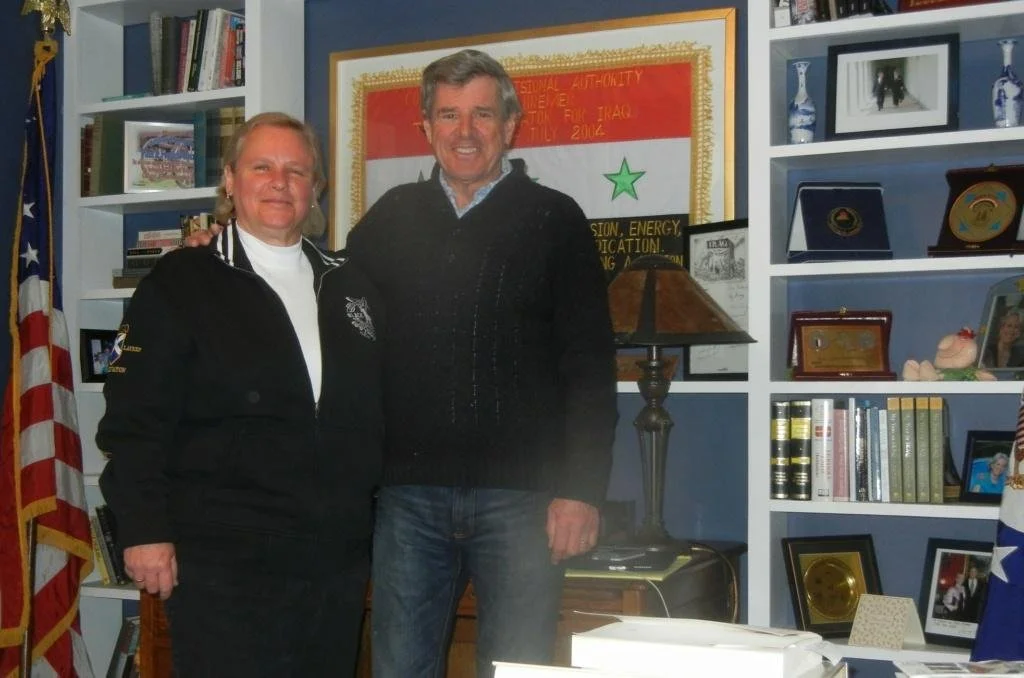
I had the pleasure of helping Bondlady with many things but the most important thing that I did was facilitate the radio interview with Ambassador Paul Bremer. I had the distinct honor of meeting the Ambassador at his home in Vermont and help put together that historic interview. He was gracious and informative and spent several hours with me. I will include a picture of us at his home.
It truly has been my honor and privilege to be a member here at BLC. I still believe in our investment, it sure is taking a long time though
All my best wishes to each and every one of you ... Timmy Tlm724
For current and reliable Iraqi news please visit: https://www.bondladyscorner.com
Experts Warn The Internet Will Go Down In A Big Way — And You'd Better Be Ready
Experts Warn The Internet Will Go Down In A Big Way — And You'd Better Be Ready
Geoff Williams Sat, December 27, 2025 at 7:00 AM EST
It’s bad enough when the internet goes down for a few hours because your power went out after a storm, but what if the internet went down indefinitely, sort of everywhere? What if your state or an entire region of the country lacked the internet or electricity because of a cyberattack or something innocuous, like problems with an aging grid or the federal government forgot to pay a bill?
Do you have a plan for that?
Most people don’t. In fact, the Federal Emergency Management Agency surveyed 7,525 Americans for their 2024 report on disaster preparedness and found that 57% of the country isn’t prepared for, and isn’t planning to prepare for, a disaster.
Experts Warn The Internet Will Go Down In A Big Way — And You'd Better Be Ready
Geoff Williams Sat, December 27, 2025 at 7:00 AM EST
It’s bad enough when the internet goes down for a few hours because your power went out after a storm, but what if the internet went down indefinitely, sort of everywhere? What if your state or an entire region of the country lacked the internet or electricity because of a cyberattack or something innocuous, like problems with an aging grid or the federal government forgot to pay a bill?
Do you have a plan for that?
Most people don’t. In fact, the Federal Emergency Management Agency surveyed 7,525 Americans for their 2024 report on disaster preparedness and found that 57% of the country isn’t prepared for, and isn’t planning to prepare for, a disaster.
That’s a shame because an internet or electric type of emergency is likely to occur one of these days, said Robert Siciliano, a security analyst and author of ”Identity Theft Privacy: Security Protection and Fraud Prevention.” “I don’t think it is a matter of ‘if,’ it is simply a matter of ‘when.’ The electrical grid, as we know it, is only about 120 years old. And it is scattered in such a way that local or regional brownouts or total failures are happening too often.”
Siciliano added, “Having backup food, water, batteries and power should be a consideration for everyone. The term ‘prepper’ has gotten a bad rap.” He said that if you want to function in the event of a regional or nationwide electric or internet outage, “I think at this point everybody should be prepping.”
So if you want to keep your tech during a period of digital upheaval, feel free to borrow these strategies.
Try and create a backup internet plan.
“Preparing for individual internet disruptions and power outages is straightforward – you need backup internet access methods and/or the ability to generate energy on your own,” said Sean Gold, who should probably hang out with Siciliano. Gold is a prepper and the owner of the website TruePrepper. Gold also has a degree in emergency management and was an emergency manager in the Air Force.
Gold said that the best way to not lose your digital life during an internet or electrical grid crisis is to assume it’s going to happen sooner or later and plan for it.
“A cellular hotspot is an easy way to get through a day or two of internet outages, but if the outage is widespread, then that plan is much less effective with the overloaded cell towers. Many preppers are starting to embrace Starlink and satellite ISPs even if they are in less rural areas,” he said.
Of course, if you’re not a tech person, Gold might as well be talking in Sanskrit. So let’s do a quick translation:
Hotspot: This allows you to hook up your smartphone to a laptop, tablet, smart TV or any device that has the internet. This is helpful if your phone can’t access Wi-Fi but other devices you own can. If the internet is out everywhere, however, as Gold said, you’re not going to get very far with a personal hotspot (your phone’s settings will have instructions as to how to set up a hotspot).
Starlink. You’ve probably heard of Starlink; Elon Musk owns it. It’s a satellite internet provider, so if cell phone towers are down, well, no problem – you’re accessing the internet through satellite technology. Starlink can be pricey: $80 to $120 is what it charges residential households that want to use it, and you’ll have to buy the $349 equipment to set it up.
Satellite ISPs. It’s an abbreviated term for satellite internet service provider. The aforementioned Starlink is one. Don’t feel like making Musk richer than he already is? You may want to check out Hughesnet (plans start at $49.99 a month for a full year, but you need to set up a two-year contract). Viasat is another prominent satellite internet provider (plans start at $69.99 a month).
Tech: An Amazon Outage Nearly Took Out The Whole Internet. Here’s Just How Big It Was.
TO READ MORE: https://www.yahoo.com/news/articles/experts-warn-internet-down-big-120017712.html
No 10pm Newsletter Tonight - Merry Christmas from The Dinar Recaps Team
Please scroll down for new posts.
All of us at Dinar Recaps would like to wish all our Readers a Very Merry Christmas.
We wish that all your dreams and wishes come true this coming year.
Due to the holiday, we plan to have new posts off and on Wednesday and Thursday. Please check our BLOG PAGE for all new posts.
On Christmas Eve and Christmas Day we plan to have 10am and 6pm (ET) email Newsletters (no 10pm (ET)).
Have a happy and safe holiday. The Dinar Recaps Team
Please scroll down for new posts.
All of us at Dinar Recaps would like to wish all our Readers a Very Merry Christmas.
We wish that all your dreams and wishes come true this coming year.
Due to the holiday, we plan to have new posts off and on Wednesday and Thursday. Please check our BLOG PAGE for all new posts.
On Christmas Eve and Christmas Day we plan to have 10am and 6pm (ET) email Newsletters (no 10pm (ET)).
Have a happy and safe holiday. The Dinar Recaps Team

Christmas 1881
TNT:
Mot: Christmas 1881
Pa never had much compassion for the lazy or those who squandered their means and then never had enough for the necessities. But for those who were genuinely in need, his heart was as big as all outdoors.
It was from him that I learned the greatest joy in life comes from giving, not from receiving.
It was Christmas Eve, 1881. I was fifteen years old and feeling like the world had caved in on me because there just hadn't been enough money to buy me the rifle that I'd wanted for Christmas.
TNT:
Mot: Christmas 1881
Pa never had much compassion for the lazy or those who squandered their means and then never had enough for the necessities. But for those who were genuinely in need, his heart was as big as all outdoors.
It was from him that I learned the greatest joy in life comes from giving, not from receiving.
It was Christmas Eve, 1881. I was fifteen years old and feeling like the world had caved in on me because there just hadn't been enough money to buy me the rifle that I'd wanted for Christmas.
We did the chores early that night for some reason. I just figured Pa wanted a little extra time so we
could read in the Bible.
After supper was over I took my boots off and stretched out in front of the fireplace and waited for Pa to get down the old Bible.
I was still feeling sorry for myself and, to be honest, I wasn't in much of a mood to read Scriptures. But Pa didn't get the Bible, instead he bundled up again and went outside.
I couldn't figure it out because we had already done all the chores. I didn't worry about it long though, I was too busy wallowing in self-pity.
Soon Pa came back in. It was a cold clear night out and there was ice in his beard. "Come on, Matt," he said. "Bundle up good, it's cold out tonight."
I was really upset then. Not only wasn't I getting the rifle for Christmas, now Pa was dragging me out in the cold, and for no earthly reason that I could see.
We'd already done all the chores, and I couldn't think of anything else that needed doing, especially not on a night like this. But I
knew Pa was not very patient at one dragging one's feet when he'd told them to do something, so I got up and put my boots back on and got my cap, coat, and mittens.
Ma gave me a mysterious smile as I opened the door to leave the house. Something was up, but I didn't know what.
Outside, I became even more dismayed. There in front of the house was the work team, already hitched to the big sled. Whatever it was we were going to do wasn't going to be a short, quick, little job. I could tell.
We never hitched up this sled unless we were going to haul a big load. Pa was already up on the seat, reins in hand. I reluctantly climbed up beside him. The cold was already biting at me. I wasn't happy.
When I was on, Pa pulled the sled around the house and stopped in front of the woodshed. He got off and I followed. "I think we'll put on the high sideboards," he said. "Here, help me." The high sideboards! It had been a bigger job than I wanted to do with just the low sideboards on, but whateve it was we were going to do would be a lot bigger with the high side boards on.
After we had exchanged the sideboards, Pa went into the woodshed and came out with an armload of wood - the wood I'd spent all summer hauling down from the mountain, and then all fall sawing into blocks and splitting. What was he doing?
Finally I said something. "Pa," I asked, "what are you doing?" "You been by the Widow Jensen's lately?" he asked.
The Widow Jensen lived about two miles down the road. Her husband had died a year or so before and left her with three children, the oldest being eight. Sure I'd been by, but so what?
Yeah," I said, "Why?"
"I rode by just today," Pa said. "Little Jakey was out digging around in the woodpile trying to find a few chips. They're out of wood, Matt." That was all he said and then he turned and went back into the woodshed for another armload of wood. I followed him. We loaded the sled so high that I began to wonder if the horses would be able to pull it.
Finally, Pa called a halt to our loading, then we went to the smoke house and Pa took down a big ham and a side of bacon. He handed them to me and told me to put them in the sled and wait.
When he returned he was carrying a sack of flour over his right shoulder and a smaller sack of something in his left hand. "What's in the little sack?" I asked. Shoes, they're out of shoes. Little Jakey just had gunny sacks wrapped around his feet when he was out in the woodpile this morning. I got the children a little candy too. It just wouldn't be Christmas without a little candy."
We rode the two miles to Widow Jensen's pretty much in silence. I tried to think through what Pa was doing. We didn't have much by worldly standards. Of course, we did have a big woodpile, though most of what was left now was still in the form of logs that I would have to saw into blocks and split before we could use it.
We also had meat and flour, so we could spare that, but I knew we didn't have any money, so why was Pa buying them shoes and candy? Really, why was he doing any of this? Widow Jensen had closer neighbors than us; it shouldn't have been our concern.
We came in from the blind side of the Jensen house and unloaded the wood as quietly as possible, then we took the meat and flour and shoes to the door. We knocked. The door opened a crack and a timid voice said, "Who is it?"
"Lucas Miles, Ma'am, and my son, Matt... could we come in for a bit?"
Widow Jensen opened the door and let us in. She had a blanket wrapped around her shoulders. The children were wrapped in another and were sitting in front of the fireplace by a very small fire that hardly gave off any heat at all. Widow Jensen fumbled with a match and finally lit the lamp.
"We brought you a few things, Ma'am," Pa said and set down the sack of flour. I put the meat on the table. Then Pa handed her the sack that had the shoes in it. She opened it hesitantly and took the shoes out, one pair at a time.
There was a pair for her and one for each of the children - sturdy shoes, the best... shoes that would last. I watched her carefully. She bit her lower lip to keep it from trembling and then tears filled her eyes and started running down her cheeks. She looked up at Pa like she wanted to say something, but it wouldn't come out.
"We brought a load of wood too, Ma'am," Pa said. He turned to me and said, "Matt, go bring in enough to last awhile. Let's get that fire up to size and heat this place up."
I wasn't the same person when I went back out to bring in the wood. I had a big lump in my throat and as much as I hate to admit it, there were tears in my eyes too.
In my mind I kept seeing those three kids huddled around the fireplace and their mother standing there with tears running down her cheeks with so much gratitude in her heart that she couldn't speak.
My heart swelled within me and a joy that I'd never known before, filled my soul. I had given at Christmas many times before, but never when it had made so much difference. I could see we were literally saving the lives of these people.
I soon had the fire blazing and everyone's spirits soared. The kids started giggling when Pa handed them each a piece of candy and Widow Jensen looked on with a smile that probably hadn't crossed her face for a long time.
She finally turned to us. "God bless you," she said. "I know the Lord has sent you. The children and I have been praying that he would send one of his angels to spare us."
In spite of myself, the lump returned to my throat and the tears welled up in my eyes again. I'd never thought of Pa in those exact terms before, but after Widow Jensen mentioned it, I could see that it was probably true.
I was sure that a better man than Pa had never walked the earth. I started remembering all the times he had gone out of his way for Ma and me, and many others. The list seemed endless as I thought on it.
Pa insisted that everyone try on the shoes before we left. I was amazed when they all fit, and I wondered how he had known what sizes to get. Then I guessed that if he was on an errand for the Lord, that the Lord would make sure he got the right sizes.
Tears were running down Widow Jensen's face again when we stood up to leave. Pa took each of the kids in his big arms and gave them a hug. ... They clung to him and didn't want us to go. I could see that they missed their Pa, and I was glad that I still had mine.
At the door Pa turned to Widow Jensen and said, "The Mrs. wanted me to invite you and the children over for Christmas dinner tomorrow.
The turkey will be more than the three of us can eat, and a man can get cantankerous if he has to eat turkey for too many meals. We'll be by to get you about eleven. It'll be nice to have some little ones around again. Matt, here, hasn't been little for quite a spell."
I was the youngest... my two brothers and two sisters had all married and had moved away.
Widow Jensen nodded and said, "Thank you, Brother Miles. I don't have to say, may the Lord bless you, I know for certain that He will."
Out on the sled I felt a warmth that came from deep within and I didn't even notice the cold. When we had gone a ways, Pa turned to me and said, "Matt, I want you to know something. Your Ma and me have been tucking a little money away here and there all year so we could buy that rifle for you, but we didn't have quite enough.
Then yesterday a man who owed me a little money from years back came by to make things square. Your Ma and me were real excited, thinking that now we could get you that rifle, and I started into town this morning to do just that, but on the way I saw little Jakey out scratching in the woodpile with his feet wrapped in those gunny sacks and I knew what I had to do.
Son, I spent the money for shoes and a little candy for those children. I hope you understand."
I understood alright... and my eyes became wet with tears again.
I understood very well, and I was so glad Pa had done it. Now the rifle seemed very low on my list of priorities. Pa had given me a lot more. He had given me the look on Widow Jensen's face and the radiant smiles of her three children.
For the rest of my life, whenever I saw any of the Jensens, or split a block of wood, I remembered, and remembering brought back that same joy I felt riding home beside Pa that night.
Pa had given me much more than a rifle that night, he had given me the best Christmas of my life.
Don't be too busy today... share this inspiring message. Merry Christmas and God bless you!
The old man sat in his gas station on a cold Christmas Eve
TNT:
Tishwash: The old man sat in his gas station on a cold Christmas Eve
A beautiful read during this magical season
The old man sat in his gas station on a cold Christmas Eve. He hadn't been anywhere in years since his wife had passed away. It was just another day to him. He didn't hate Christmas, just couldn't find a reason to celebrate.
He was sitting there looking at the snow that had been falling for the last hour and wondering what it was all about when the door opened and a homeless man stepped through.
TNT:
Tishwash: The old man sat in his gas station on a cold Christmas Eve
A beautiful read during this magical season
The old man sat in his gas station on a cold Christmas Eve. He hadn't been anywhere in years since his wife had passed away. It was just another day to him. He didn't hate Christmas, just couldn't find a reason to celebrate.
He was sitting there looking at the snow that had been falling for the last hour and wondering what it was all about when the door opened and a homeless man stepped through.
Instead of throwing the man out, Old George as he was known by his customers, told the man to come and sit by the heater and warm up. "Thank you, but I don't mean to intrude," said the stranger. "I see you're busy, I'll just go." "Not without something hot in your belly." George said.
He turned and opened a wide mouth Thermos and handed it to the stranger. "It ain't much, but it's hot and tasty. Stew ... Made it myself. When you're done, there's coffee and it's fresh."
Just at that moment he heard the "ding" of the driveway bell. "Excuse me, be right back," George said. There in the driveway was an old '73 Chevy. Steam was rolling out of the front. The driver was panicked. "Mister can you help me!" said the driver, with a deep Spanish accent. "My wife is with child and my car is broken." George opened the hood. It was bad. The block looked cracked from the cold, the car was dead. "You ain't going in this thing," George said as he turned away.
"But Mister, please help ..." The door of the office closed behind George as he went inside. He went to the office wall and got the keys to his old truck, and went back outside. He walked around the building, opened the garage, started the truck and drove it around to where the couple was waiting. "Here, take my truck," he said. "She ain't the best thing you ever looked at, but she runs real good."
George helped put the woman in the truck and watched as it sped off into the night. He turned and walked back inside the office. "Glad I gave 'em the truck, their tires were shot too. That 'ol truck has brand new ." George thought he was talking to the stranger, but the man had gone. The Thermos was on the desk, empty, with a used coffee cup beside it. "Well, at least he got something in his belly," George thought.
George went back outside to see if the old Chevy would start. It cranked slowly, but it started. He pulled it into the garage where the truck had been. He thought he would tinker with it for something to do. Christmas Eve meant no customers. He discovered the block hadn't cracked, it was just the bottom hose on the radiator. "Well, shoot, I can fix this," he said to himself. So he put a new one on.
"Those tires ain't gonna get 'em through the winter either." He took the snow treads off of his wife's old Lincoln. They were like new and he wasn't going to drive the car anyway.
As he was working, he heard shots being fired. He ran outside and beside a police car an officer lay on the cold ground. Bleeding from the left shoulder, the officer moaned, "Please help me."
George helped the officer inside as he remembered the training he had received in the Army as a medic. He knew the wound needed attention. "Pressure to stop the bleeding," he thought. The uniform company had been there that morning and had left clean shop towels. He used those and duct tape to bind the wound. "Hey, they say duct tape can fix anythin'," he said, trying to make the policeman feel at ease.
"Something for pain," George thought. All he had was the pills he used for his back. "These ought to work." He put some water in a cup and gave the policeman the pills. "You hang in there, I'm going to get you an ambulance."
The phone was dead. "Maybe I can get one of your buddies on that there talk box out in your car." He went out only to find that a bullet had gone into the dashboard destroying the two way radio.
He went back in to find the policeman sitting up. "Thanks," said the officer. "You could have left me there. The guy that shot me is still in the area."
George sat down beside him, "I would never leave an injured man in the Army and I ain't gonna leave you." George pulled back the bandage to check for bleeding. "Looks worse than what it is. Bullet passed right through 'ya. Good thing it missed the important stuff though. I think with time you’re gonna be right as rain."
George got up and poured a cup of coffee. "How do you take it?" he asked. "None for me," said the officer. "Oh, yer gonna drink this. Best in the city. Too bad I ain't got no donuts." The officer laughed and winced at the same time.
The front door of the office flew open. In burst a young man with a gun. "Give me all your cash! Do it now!" the young man yelled. His hand was shaking and George could tell that he had never done anything like this before.
"That's the guy that shot me!" exclaimed the officer.
"Son, why are you doing this?" asked George, "You need to put the cannon away. Somebody else might get hurt."
The young man was confused. "Shut up old man, or I'll shoot you, too. Now give me the cash!"
The cop was reaching for his gun. "Put that thing away," George said to the cop, "we got one too many in here now."
He turned his attention to the young man. "Son, it's Christmas Eve. If you need money, well then, here. It ain't much but it's all I got. Now put that pea shooter away."
George pulled $150 out of his pocket and handed it to the young man, reaching for the barrel of the gun at the same time. The young man released his grip on the gun, fell to his knees and began to cry. "I'm not very good at this am I? All I wanted was to buy something for my wife and son," he went on. "I've lost my job, my rent is due, my car got repossessed last week."
George handed the gun to the cop. "Son, we all get in a bit of squeeze now and then. The road gets hard sometimes, but we make it through the best we can."
He got the young man to his feet, and sat him down on a chair across from the cop. "Sometimes we do stupid things." George handed the young man a cup of coffee. "Bein' stupid is one of the things that makes us human. Comin' in here with a gun ain't the answer. Now sit there and get warm and we'll sort this thing out."
The young man had stopped crying. He looked over to the cop. "Sorry I shot you. It just went off. I'm sorry officer." "Shut up and drink your coffee " the cop said. George could hear the sounds of sirens outside. A police car and an ambulance skidded to a halt. Two cops came through the door, guns drawn. "Chuck! You ok?" one of the cops asked the wounded officer.
"Not bad for a guy who took a bullet. How did you find me?"
"GPS locator in the car. Best thing since sliced bread. Who did this?" the other cop asked as he approached the young man.
Chuck answered him, "I don't know. The guy ran off into the dark. Just dropped his gun and ran."
George and the young man both looked puzzled at each other.
"That guy work here?" the wounded cop continued. "Yep," George said, "just hired him this morning. Boy lost his job."
The paramedics came in and loaded Chuck onto the stretcher. The young man leaned over the wounded cop and whispered, "Why?"
Chuck just said, "Merry Christmas boy ... and you too, George, and thanks for everything."
"Well, looks like you got one doozy of a break there. That ought to solve some of your problems."
George went into the back room and came out with a box. He pulled out a ring box. "Here you go, something for the little woman. I don't think Martha would mind. She said it would come in handy some day."
The young man looked inside to see the biggest diamond ring he ever saw. "I can't take this," said the young man. "It means something to you."
"And now it means something to you," replied George. "I got my memories. That's all I need."
George reached into the box again. An airplane, a car and a truck appeared next. They were toys that the oil company had left for him to sell.
Here's something for that little man of yours."
The young man began to cry again as he handed back the $150 that the old man had handed him earlier.
"And what are you supposed to buy Christmas dinner with? You keep that too," George said. "Now git home to your family."
The young man turned with tears streaming down his face. "I'll be here in the morning for work, if that job offer is still good."
"Nope. I'm closed Christmas day," George said. "See ya the day after."
George turned around to find that the stranger had returned. "Where'd you come from? I thought you left?"
"I have been here. I have always been here," said the stranger. "You say you don't celebrate Christmas. Why?"
"Well, after my wife passed away, I just couldn't see what all the bother was. Puttin' up a tree and all seemed a waste of a good pine tree. Bakin' cookies like I used to with Martha just wasn't the same by myself and besides I was gettin' a little chubby."
The stranger put his hand on George's shoulder. "But you do celebrate the holiday, George. You gave me food and drink and warmed me when I was cold and hungry. The woman with child will bear a son and he will become a great doctor.
The policeman you helped will go on to save 19 people from being killed by terrorists. The young man who tried to rob you will make you a rich man and not take any for himself. "That is the spirit of the season and you keep it as good as any man."
George was taken aback by all this stranger had said. "And how do you know all this?" asked the old man.
"Trust me, George. I have the inside track on this sort of thing. And when your days are done you will be with Martha again."
The stranger moved toward the door. "If you will excuse me, George, I have to go now. I have to go home where there is a big celebration planned."
George watched as the old leather jacket and the torn pants that the stranger was wearing turned into a white robe. A golden light began to fill the room.
"You see, George ... it's My birthday. Merry Christmas."
George fell to his knees and replied, "Happy Birthday, Lord Jesus"
Merry Christmas!!
MERRY CHRISTMAS AND GOD BLESS
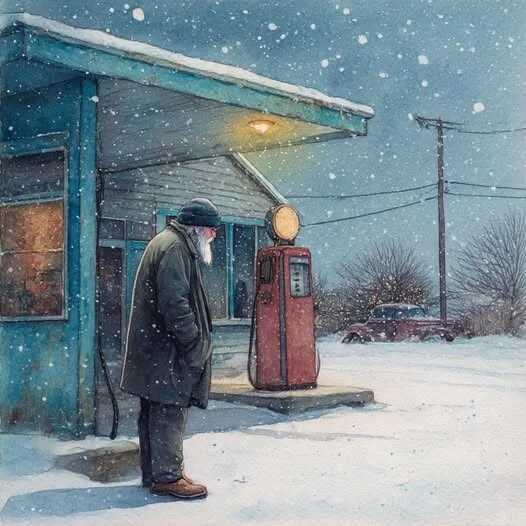
One of the most famous Christmas scenes in movie history was filmed in secret
TNT:
Mot: One of the most famous Christmas scenes in movie history was filmed in secret
One of the most famous Christmas scenes in movie history was filmed in secret, right in front of thousands of New Yorkers who didn’t know what was going on.
When you watch Miracle on 34th Street, you’re not looking at a Hollywood set or paid extras. You’re seeing a real moment from 1946, captured as it happened.
Director George Seaton decided not to use a studio and instead put his cast in the real Macy’s Thanksgiving Day Parade.
TNT:
Mot: One of the most famous Christmas scenes in movie history was filmed in secret
One of the most famous Christmas scenes in movie history was filmed in secret, right in front of thousands of New Yorkers who didn’t know what was going on.
When you watch Miracle on 34th Street, you’re not looking at a Hollywood set or paid extras. You’re seeing a real moment from 1946, captured as it happened.
Director George Seaton decided not to use a studio and instead put his cast in the real Macy’s Thanksgiving Day Parade.
Since the parade was live and couldn’t be stopped or done again, the crew had to work very carefully.
To avoid drawing attention, cameras were tucked away in apartment windows and small nooks along the street.
Edmund Gwenn didn’t just play Santa for the movie; he actually served as the official Santa for the real 1946 parade.
He rode the final float and even climbed the ladder to the Macy’s marquee at the end, all while thousands of cheering spectators had no clue he was an actor filming a movie.
The crew used nine cameras simultaneously to ensure they caught every moment. It was so cold that November morning that the cameras actually froze, forcing the crew to use heating blankets to keep them running.
The looks of amazement on the children’s faces in the film are real because they truly thought they were witnessing Santa Claus’s arrival in New York. Even 8-year-old Natalie Wood, who played Susan, admitted years later that she believed Gwenn was the real deal during filming because she never saw him without his beard.
This mix of real life and storytelling turned the film into a lasting snapshot of the true joy of a New York City Christmas after the war.
Gwenn’s belief wasn’t just a charming sentiment for the cameras; it was rooted in a production that blurred the lines between fiction and reality.
"Now I know there's a Santa Claus." The "miracle" followed Edmund Gwenn all the way to the Academy Awards. When he stepped onto the stage to accept his Best Supporting Actor Oscar, he stayed true to the spirit of the film. He famously told the audience:
"Now I know there's a Santa Claus."